
Instructions for How to Love Me
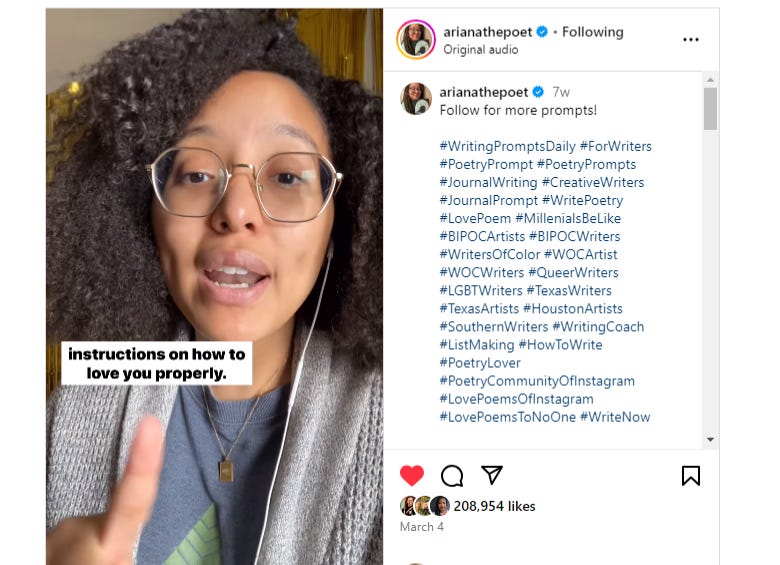
After this week's prompt by poet Ariana Brown
I don’t like writing to prompts. They remind me too much of school and my teacher asking me to write about the funnest thing I did the past weekend. Once, in second grade, that teacher humiliated me in front of the class by saying out loud: “Let me guess, Juliane, you went to the bird sanctuary again.” Everyone laughed, and I turned red and considered lying, because, yes, we had gone to the stupid bird sanctuary again.
The bird sanctuary was in the next town over— a sad zoo for creepy birds. But my mom was broke, and the place was free. I mostly remember a terrifying ostrich that towered over me and would run along the fence, never breaking eye contact and randomly spitting at people.
Anyway, unexpected things came out, when I followed this week's writing prompt: Instructions on how to love you properly.
I’ve spent some time thinking about how to love myself, but I’ve focused very little on sharing with other people how I’d like to be loved.
It felt like I shouldn’t ask or shouldn’t have to ask, and that kind of cringe-y resistance has come to signal a red flag pointing towards something uncomfortable to explore.
So, I started writing:
When I act crazy, don’t call me crazy. Instead, remind me that acting crazy and being crazy are different.
Don’t be mad when I have to cancel plans. Know that I already feel terrible every time I have to disappoint anyone over anything.
Maybe I should write to prompts more often, because I obviously had a hard time following the instructions. My default was to tell someone what not to do, how not to love me.
Years ago, I’d read in a parenting book that “Don’t spill the juice!” makes it much more likely that your kid will spill the damn juice than saying, “Keep the juice in the glass.” Among the many reasons why I never want to learn how to ski, even though I live in winter wonderland, is that I would immediately crash into the first available tree while trying desperately to avoid it. I would be admonished to focus on the path between the trees, yet I would exclusively pay attention to the obstacles.
I tried again with the prompt, focusing on what I wanted instead of what I didn’t.
When I say, “I can’t do this anymore,” don’t tell me that yes, I can. Tell me that even if I can’t, you will love me just the same.
When I wonder if I’m doing enough, remember I’m asking if I am enough. Remind me that I am.
When I wonder if I’m too much, remember that I wasn’t allowed to have needs or feelings. This often makes me repress my needs and feelings until they become overwhelming, and I projectile vomit them at you. If you can love me in those situations by not adding to my shame, not rolling your eyes at my tears, not making me feel like a burden by sighing, you give me a gift I’ve always yearned for: being accepted with all my messy, difficult, annoying parts.
I stare at those last lines and wonder why I feel such an urge to overexplain. The need to justify, defend, reframe, and convince someone that my needs are valid and “here are the 18 reasons why and the historical context going back to that time I was three years old.”
At this point, I remember why I hate writing prompts so much. But then I think of the five love languages described in the book of the same name that every 90s and early aughts couple had to read in therapy before it was adapted for singles and children—Physical Touch, Gifts, Acts of Service, Quality Time, and Words of Affirmations. The concept isn’t based on science and overly simplified, but I’ll use it as a starting point…
Feeding me, words of affirmation, and acts of service are the quickest ways to make me feel loved.
Okay, snacks are not an official love language, but they totally should be.
Maybe it sounds cutesy that my love language is Sour Patch Kids at the movies until my tongue is numb and Nutella straight from the jar when I miss my mom and the Everything Bagel Hummus you can only get at that one store. But it’s also that a couple generations back, my family didn’t always have enough to eat, and they have used food as an expression of love ever since. Loving me is not lecturing me on how unhealthy that is, but understanding that feeding me touches that basic insecurity inside of me that wonders if I’ll have enough, or if I’ll be starving for something basic I need to survive.
My grandparents loved me by making lunch for me every day after school when my mother had to work. They let me eat as many pancakes as I wanted even if I never finished the vegetable soup that went with it. Then my Opa would peel and cut apples from the garden and tell me stories about the war. His stories were so good that apples seemed like an acceptable dessert. My aunt loved me by making cheese sandwiches and cutting them into pieces when I was a toddler and just never stopped, even when I was 18 and my boyfriend had just broken up with me and I showed up crying. My partner, who used to be a chef in a different life, loved me by cooking me fluffy eggs and crispy pancetta for breakfast after nights of staying up way too late talking. My sister loved me by mailing me our favorite hot coco, the kind she made for me in the pink pot when I came to visit and which we drank while it was dark out but our circle of light around the kitchen table was bright as we ate piece after piece of dark-chocolate covered Marzipan she had delivered from the ancient German town that’s been making it the longest, because according to her, I deserve only the best of the best and how can you not count yourself lucky when you have an older sister who wants every good and beautiful and sugary almondy thing for you.
I think, great, now it sounds like I’m just obsessed with food, which I kinda am, so what’s the point in pretending I’m not. And more, feeding myself and feeding other people and being fed speaks to a need for caring and sustenance that extends beyond the physical.
So, if you love me, bake me a birthday cake and bring me dinner and divulge your secret family recipe and follow me around the house with a piece of perfectly ripe mango on a fork and take me to your favorite hole-in-the-wall place because, oh my god you must taste this!
Don’t tell me words of affirmation are pointless because actions speak louder than words. I know. But also, I grew up hearing a lot of criticism and threats and insults. The boxes of cards and letters under my bed and on my desk and in the garage are words of affirmation from people I love, a counterweight to all the times I’ve been called crazy and a bitch and a piece of shit.
Acts of service make me feel loved because I grew up learning that I had to earn my keep. My mother used to jump up from reading a book on the couch to pretend she was washing dishes when she heard my father come home. I had to be useful to be lovable. I had to be productive to earn affection.
I don’t need “tough love” in the form of a drill sergeant yelling at me to get up and hustle. I need someone fist-bumping me for laying in a hammock reading a book or taking time off when I’m sick. Loving me is making me peppermint tea with honey and a hot water bottle. Then, sitting on the couch with me for too many hours watching reruns of the Great British Baking Show and cheesy 90s rom-coms. Not getting annoyed when I wake you with my coughing. Bringing me medicine and letting me have your extra pillow without asking.
I rarely feel more loved than when my person shovels the snow and scrapes the ice and sprinkles the salt because I detest nothing more than air that freezes the hair inside my nose when I breathe. I keep writing about that time my Opa sewed a missing button back onto my jacket so I wouldn’t be cold. I can still see the surprised smile on my face as he helps me into my coat in front of the hallway mirror.
Then there are things that make me feel loved but seem extra, high-maintenance. I feel cringe-y writing them even though they’re true.
My need to feel special may seem indulgent, but maybe you can remember that I spent decades as the strong one nobody worried about. I wasn’t anyone’s concern. Because I felt invisible and unimportant, it makes me feel loved when you follow up on something I told you, when you remember my favorite flowers, and when you look at me like you’re memorizing every detail of my face even after all these years.
To love me is to celebrate every good thing that happens to me.
To love me is to know that I’m too flexible, too eager to please, too willing to contort myself around other people, and to take this into consideration when you ask me for what you want. To love me is to know how much I struggle being my own person, and not ask me to give up too much of myself, because I just might.
I will learn this on my own in time. I will get better and better at meeting my own needs. I will continue to recover and heal. I will stay committed to loving myself as well as possible.
And
I feel most loved when I can be a work in progress
When you’re intimately familiar with my wounds and their various stages of healing
When instead of ripping out stitches and pushing on bruises carelessly
You help me stop the bleeding
And, in time, kiss the silvery scars.
I originally published this Apr 26, 2024, but posting it again today, because I shared Ariana's writing prompt with you this week. If you've written your own, today is the day to submit it to me at juliane@bergmannconsulting.com, if you'd like me to consider sharing it with the Unmentionables Writing Community.
You can upgrade your subscription here to receive weekly writing prompts, join the Unmentionables Writing Community for co-writing Monday through Friday, and participate in the monthly reading lab (next one is June 11th). Would love to have you!
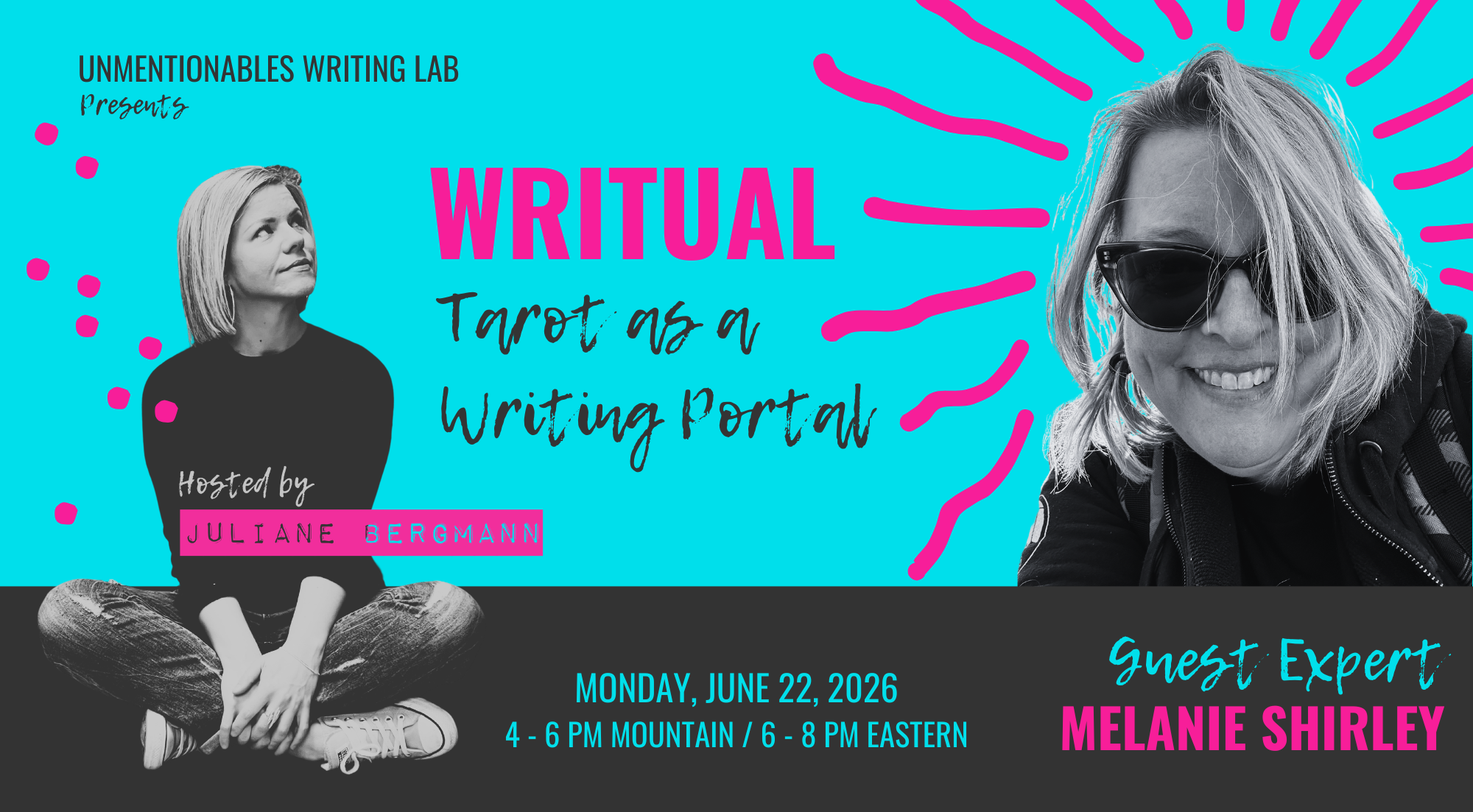
With the annual Sparkler membership, you get one free class pass a year, which you might want to use on our first workshop coming up in a few weeks:
Member discussion