
100 Days of Making
On this page, I will share what I'm making for 100 days straight. It sounds a little daunting, but also exciting to commit to some kind of creative expression every single day. If you want to join me in 100 Days of Making, please consider subscribing to Jeannine Ouellette's brilliant Substack about all things writing craft. You can learn more about it here, but this is the summary:
"For 100 days, you will, each day, make one small thing and write 100 words about it. That’s the whole practice—fifteen to thirty minutes a day, every day, for one hundred days. The making can be anything (though I’ll give you a guided invitation each day). Maybe it’s a photograph. A sketch. A meal you actually pay attention to. A rearranged shelf. A collage. A letter you may or may not send. Maybe it’s a friend, or a promise, or, as one person at the party said, amends."
Below, I will add what I'm making every day, newest one on top, oldest at the bottom.
Chapter One: Memory / Day 10 / What You're Bringing Forward
The desire to grow flowers, herbs, vegetables, and myself. The curiosity to read other people's stories and the courage to tell my own. The sweetness of making and sharing food with family and friends.
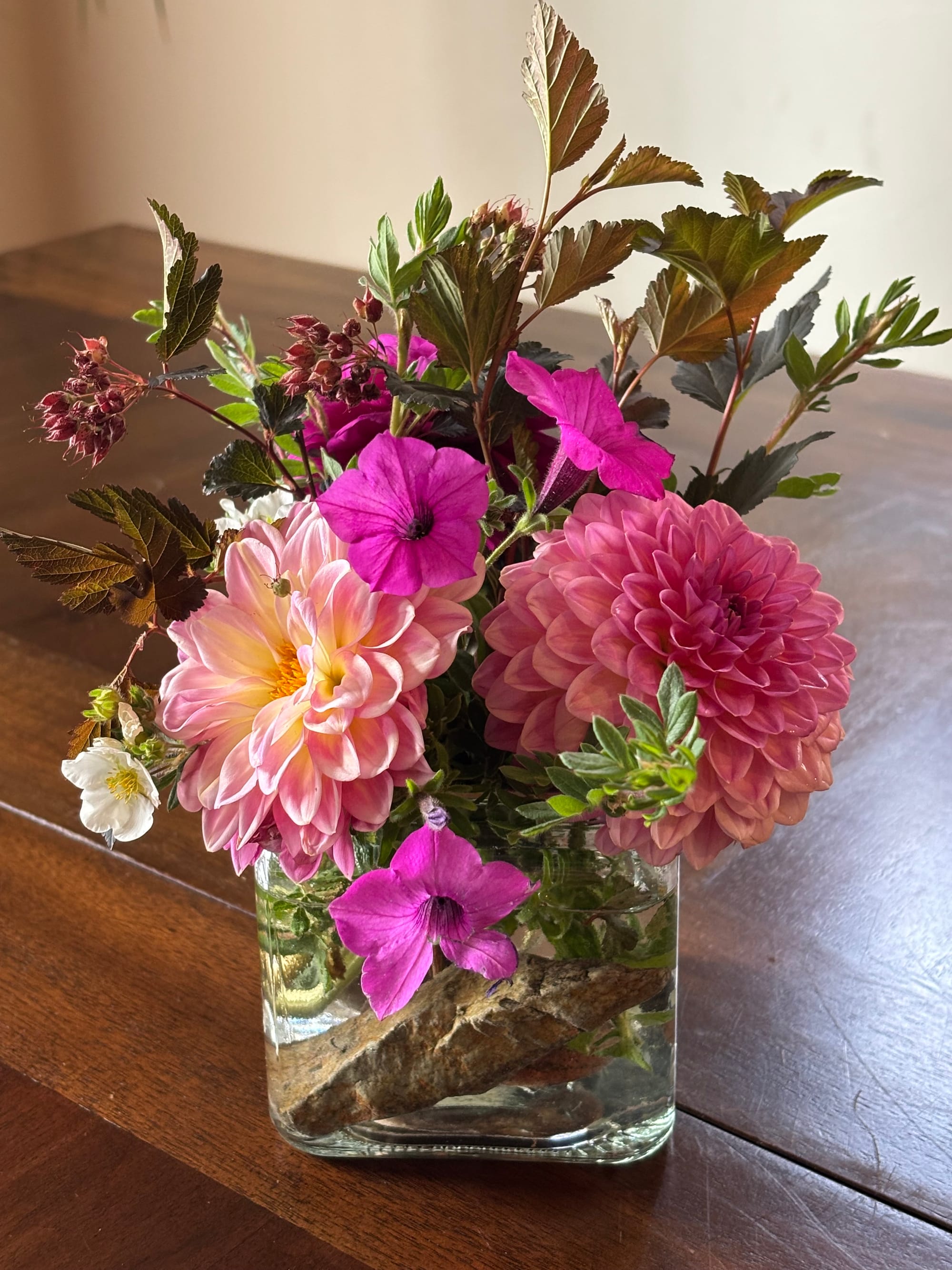
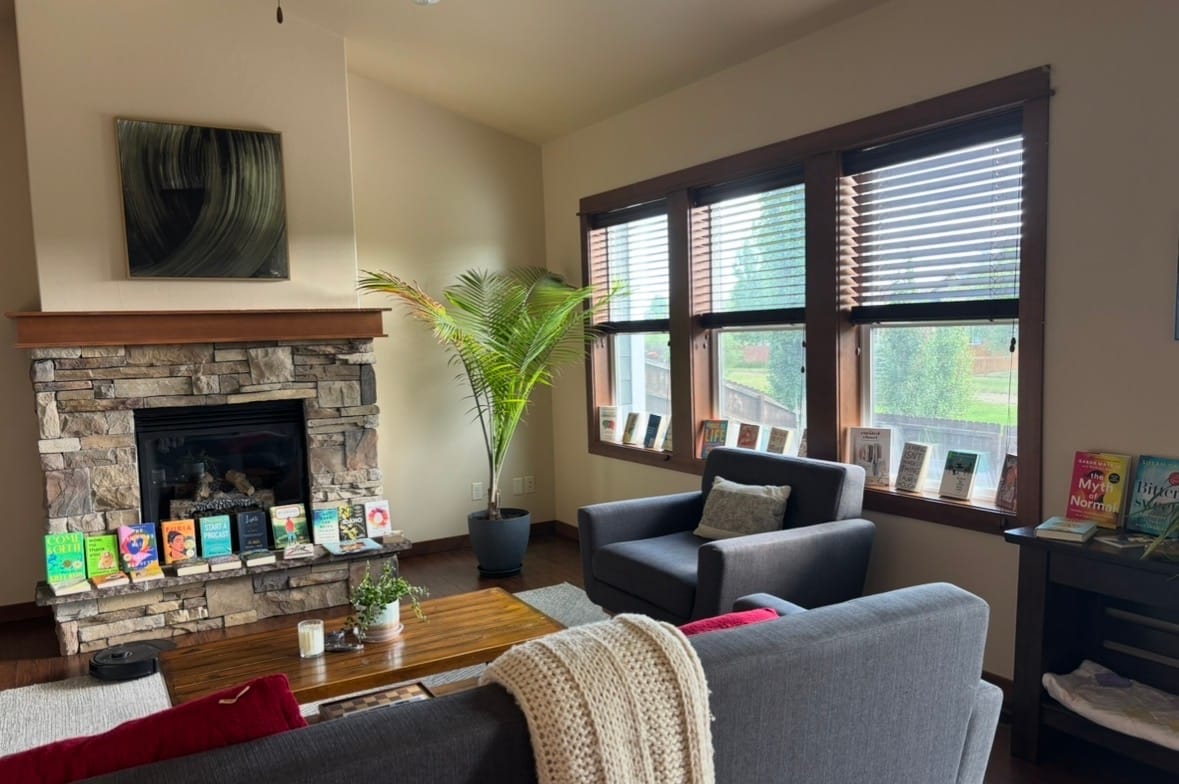
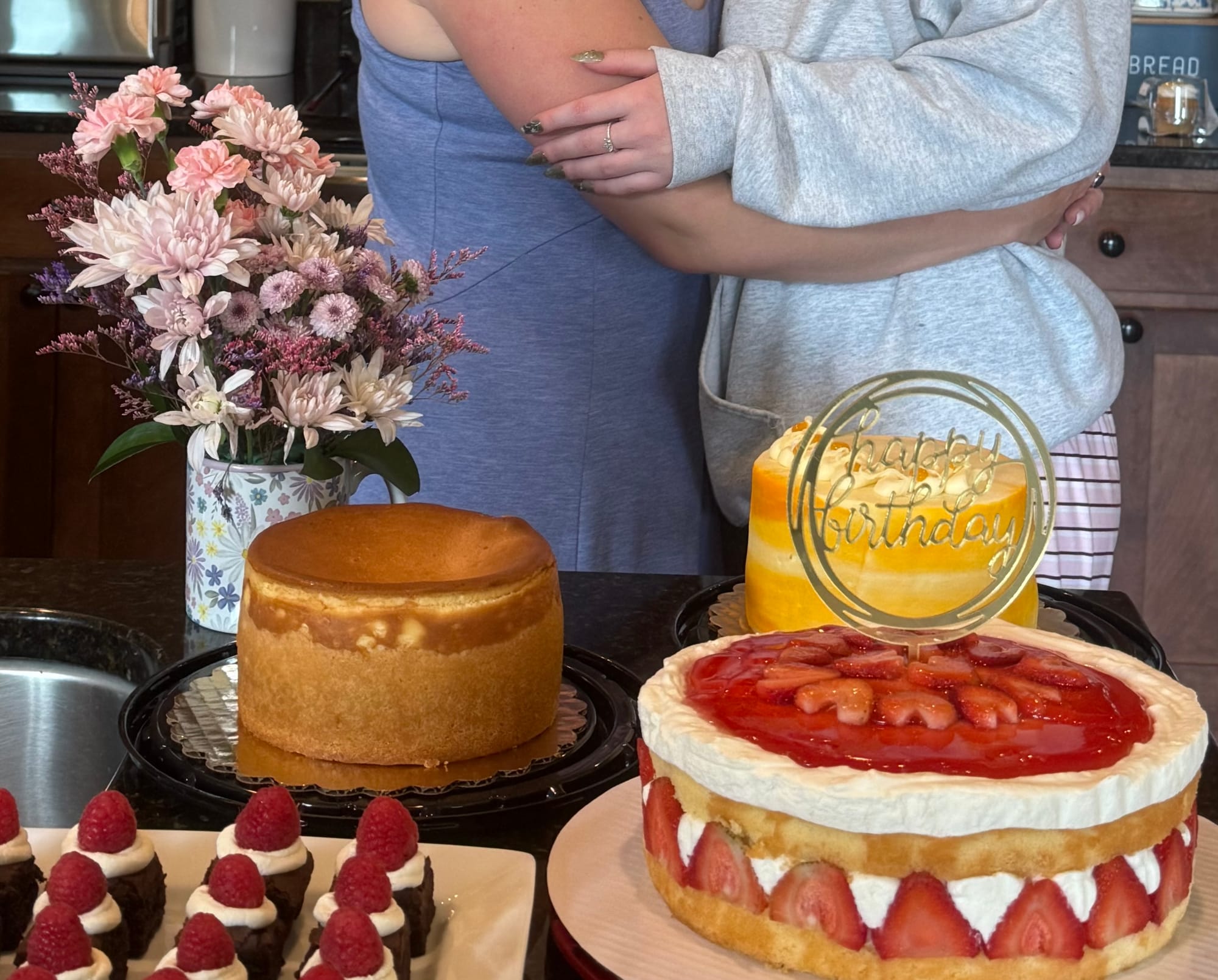
I made myself this gorgeous bouquet from flowers I'm growing on my front porch. I had a book swap with friends to "rehome" our well-loved books. A dear friend made this spectacular fraisier cake for me to share with family and friends.
If you want to use this writing prompt from Jeannine Ouellette to do your own Day 10, here it is:
"Your invitation today is meant to feel both integrating and preparatory. We've spent ten days in the past. We've made things from what we remember and what we've forgotten, from photographs and sensory fragments, from shame and tenderness and inherited stories. Before we move on, I invite you to make something that holds what this chapter taught you. Not a summary—a gesture. One small made thing that stands for what these ten days opened up. Then write 100 words about what you're bringing forward into the next chapter, and why."
Chapter One: Memory / Day 9 / Inherited
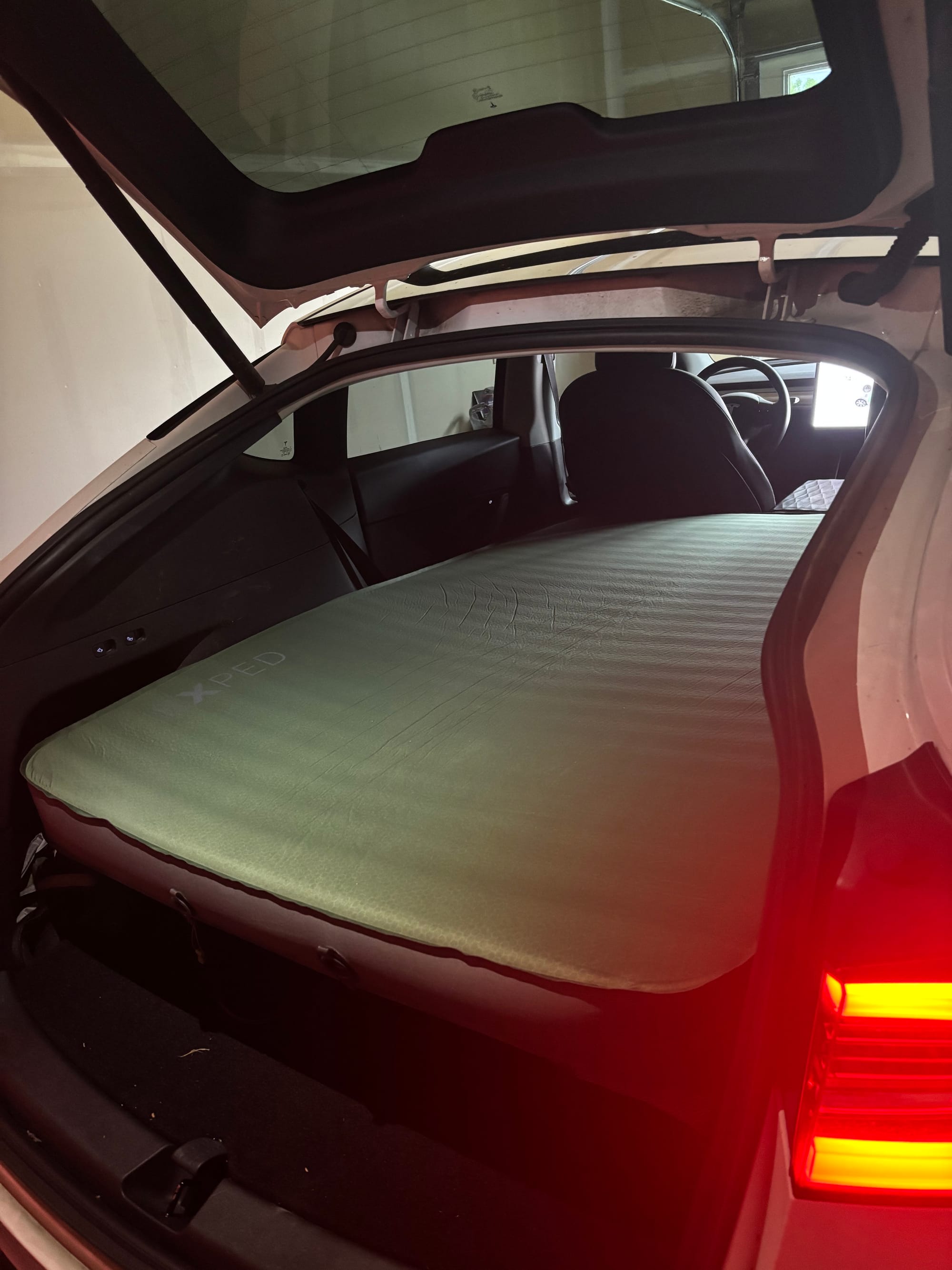
It is almost my 44th birthday. My mother has been dead for 8 years. She used to call me at midnight to be the first to sing to me and tell me the story of my birth. When my mother went into labor, my father was at work and racing to meet her at the hospital. She lay in bed, scared and in pain, when she heard my father peel into the parking lot, engine roaring and tires screeching. She swore she knew the sound of their car and recognized it from her third-story hospital room. I always imagine my father running up the stairs, taking three stairs at a time to be with us. The doctor was an arrogant prick who talked to my father as if he were stupid, because he spoke little German. The labor was 24 hours or 36 hours or some other ungodly number of hours, but definitely included one very short, very long, hot summer night. The doctor put all of his weight on my mother's stomach, trying to force me out. When she complained about the bruises the next day, the doctor pulled up his shirt sleeve to reveal a purple imprint of my mother's clenched hand. After I decided to emerge, the doctor sewed up my mother and told her he was putting in a "beauty stitch." My mother responded by kicking him in the face.
This has always been my favorite part of the story, which I'm almost certain isn't true, but it is true enough.
If you want to use this writing prompt from Jeannine Ouellette to do your own Day 9, here it is:
"Make something from a memory that belongs to someone else—a story you were told so many times it became yours, a family mythology you've carried without choosing to, something you inherited rather than lived. These borrowed memories are strange and potent. They shape us even though we weren't there.
After you make something from a memory that belongs to someone else, write 100 words about what it means to carry a memory that isn't yours—and what you've made of it, or what it has made of you."
Chapter One: Memory / Day 8 / The Other Version
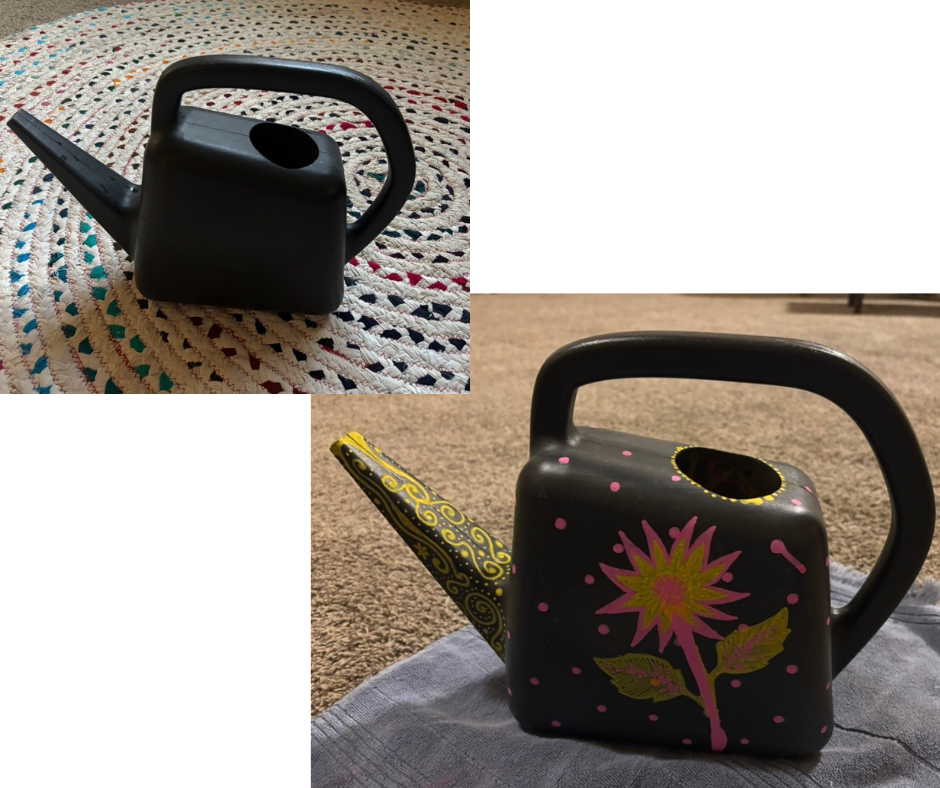
We were pulling off the Autobahn, waiting at the ramp to turn when I received my brother's text: Macht schnell! Come quick! My aunt dropped me off in front of the hospital, and I ran up the stairs, taking two or three steps at a time, while she was circling the parking lot, looking for a spot. I burst into the room where everyone was already crying.
For years, I was angry. I blamed my aunt for picking me up late at the airport while I was pacing there, waiting to say my goodbyes. It was her fault I didn't get to. It never occurred to me until recently that because she had to pick me up from the airport, my aunt missed her own father's death.
Chapter One: Memory / Day 7 / The Younger Self
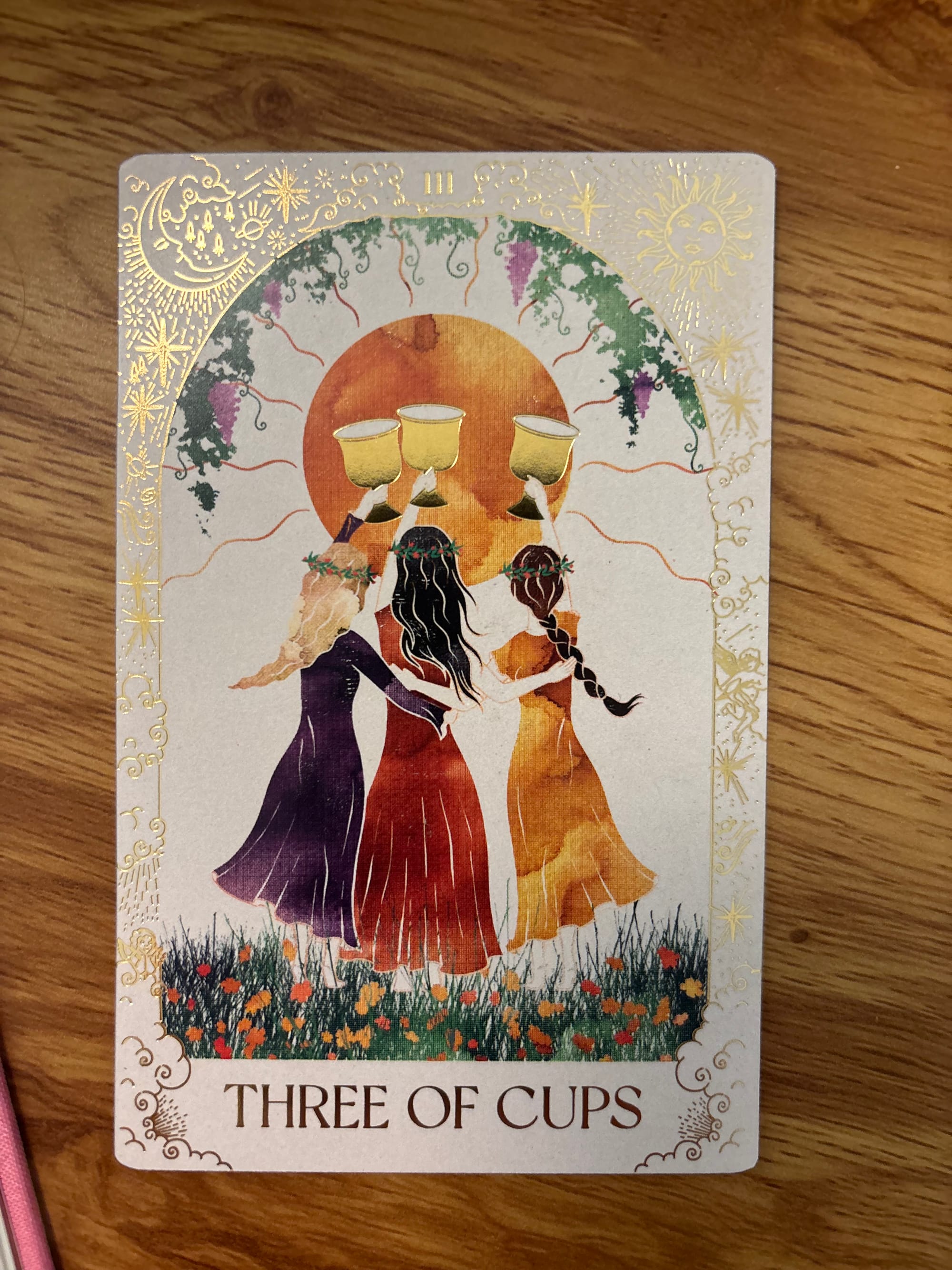
I love talking about "creating the community I crave." But I rarely talk about how you, 9-year-old Juliane, are such a big reason this is so important to almost 44-year-old me. One of our greatest wounds has become one of our greatest strengths, but before that, there was pain.
One representative moment happened on a hot July afternoon, sitting on the blistering asphalt, playing a made-up game with your two best friends, Ina and Melanie. You were so excited. You were so happy. You loved these girls. The game was whoever had the ball would wink at one of the other two girls, then roll the ball to the third. Ina winked at you and rolled the ball to Melanie. Then Melanie winked at you and rolled the ball to Ina. You were waiting for your turn, which never came. They started giggling, and you tried to laugh along. You were embarrassed and could not hide because, before each new tiny rejection, they made eye contact with you, which made you blush in shame.
But it is not shameful that one of the most beautiful things about you, your way of creating inclusive communities, came from you experiencing the pain of rejection.
If you want to use this writing prompt from Jeannine Ouellette to do your own Day 7, here it is:
"Here is where we return to a past version of ourselves, caught in a moment of separation of some kind, from self and others. Make something from a moment when you were embarrassed, or caught off guard, or found yourself in a room where everyone else seemed to know the rules and you didn't. We all have these moments—the ones we still flinch from, the ones that come back uninvited at 2 a.m. Make something for the person you were in that moment. Write toward that younger self with as much tenderness as you can manage. Write with more tenderness than you think they deserve. They deserve it."
Chapter One: Memory / Day 6 / What Remains
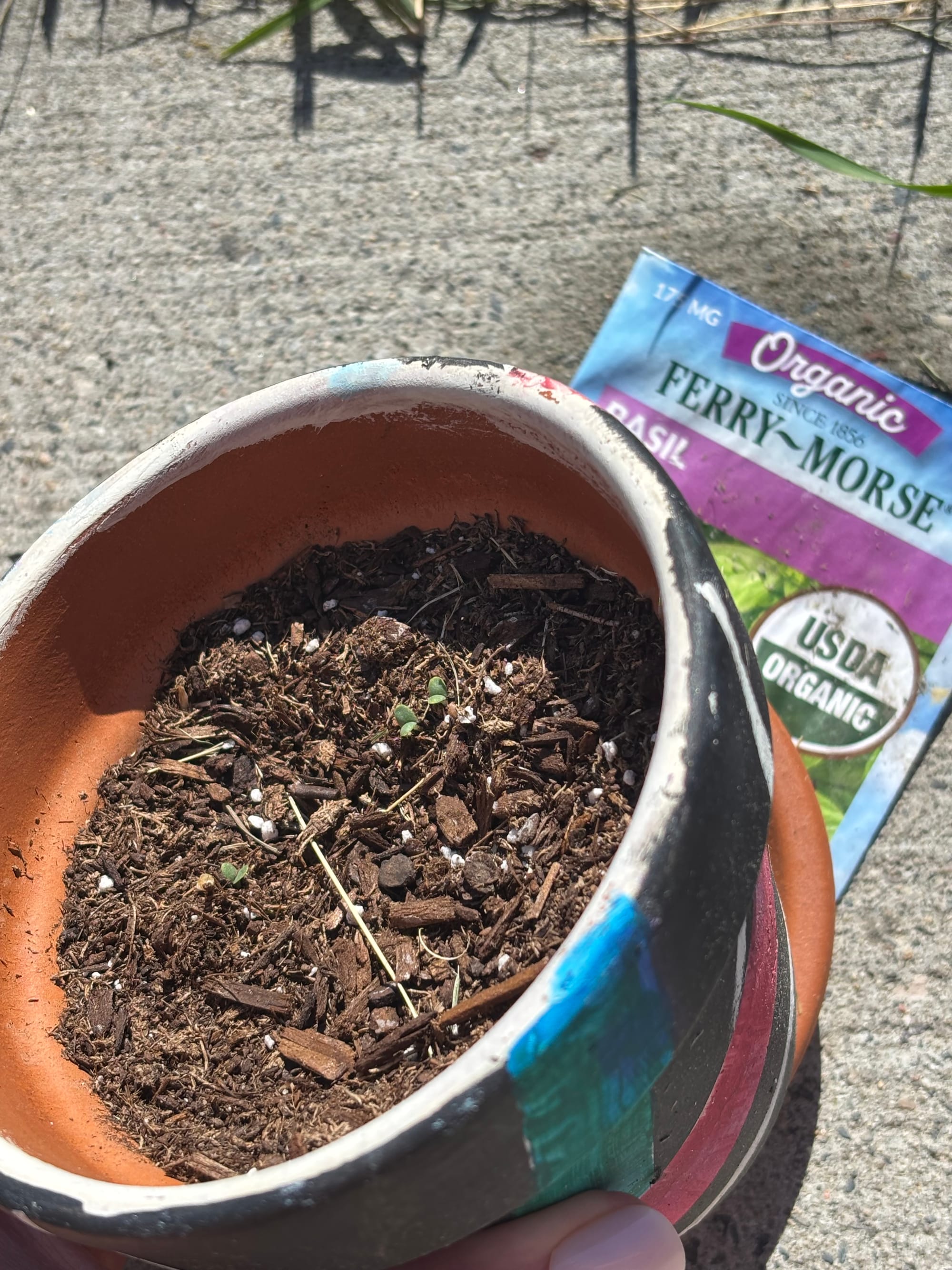
Three tiny sprouts for three people who were always so much better at growing things than me. I think I'm better at growing people, I mutter when I throw out plants I've overwatered or undersunned or planted too early or too late. How appalled I am when my office plant unfurls a slick, new leaf while I'm away. But what remains is the desire to grow things, yes, even when I'm so bad at it. And today, I see them. Three tiny double leaves of sweet basil in the one pot that shows any green out of the row of eleven pots full of herbal seeds. Maybe it wasn't really anyone's fault. Not the plants. Not the people.
If you want to use this writing prompt from Jeannine Ouellette to do your own Day 6, here it is:
"Think of someone you've lost—to death, to distance, to the long ordinary drift of lives moving in different directions. Make something that carries a trace of them: something they loved, something they taught you, something that smells or sounds or feels like them. You are not trying to bring them back. You are trying to hold what's left. Write 100 words about what remains—not what you've lost, but what has stayed.neath what you make today—the heat source, even if the surface stays cool.
Write 100 words about what it felt like to let that memory into the work."
Chapter One: Memory / Day 5 / The Untold Thing
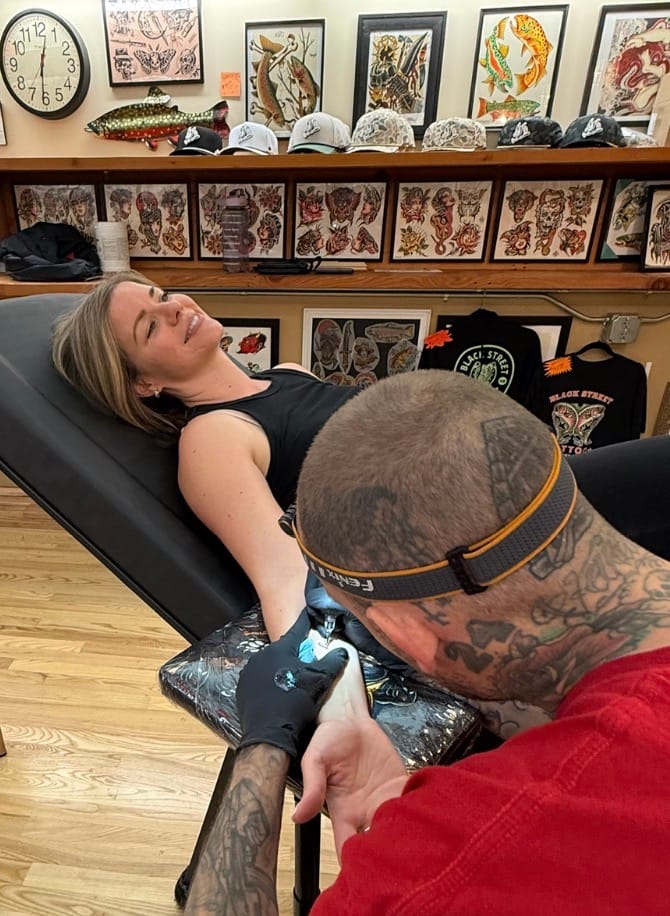
Baker is still aggressively skinny, drowning in an oversized red shirt. This time, I don't ask about his tear tattoo. Two years ago, he answered my question like someone who would never ask me about my tear tattoo, if I had one. He has a two-year old girl now, named Sage. He raises her mostly on his own. He loves it. Loves her. I want to ask for a picture, but I don't.
He positions my new tattoo four different times until I'm happy. He has a lot of skills and a very small ego. "Are you ready?" he asks quietly, before drawing the elegant loops in fire just hot enough to remind me that yeah, I am in here. When he's done, he does not ask me what the words mean, which makes me want to tell him. Instead, we make eye contact for the first time and smile at each other. I pull my hoodie sleeve over the protective sticky wrap, and walk out into the summer drizzle with a secret, the good kind this time, still intact.
If you want to use this writing prompt from Jeannine Ouellette to do your own Day 5, here it is:
"Make something from a memory that you've never shared with anyone—or something you’ve told only once, a long time ago, and never returned to. It doesn't have to be dramatic. It just has to be yours, tucked away somewhere, waiting. You don't have to reveal it in your writing, or explain it, or resolve it. But let it be the engine underneath what you make today—the heat source, even if the surface stays cool.
Write 100 words about what it felt like to let that memory into the work."
Chapter One: Memory / Day 4 / The Body Remembers
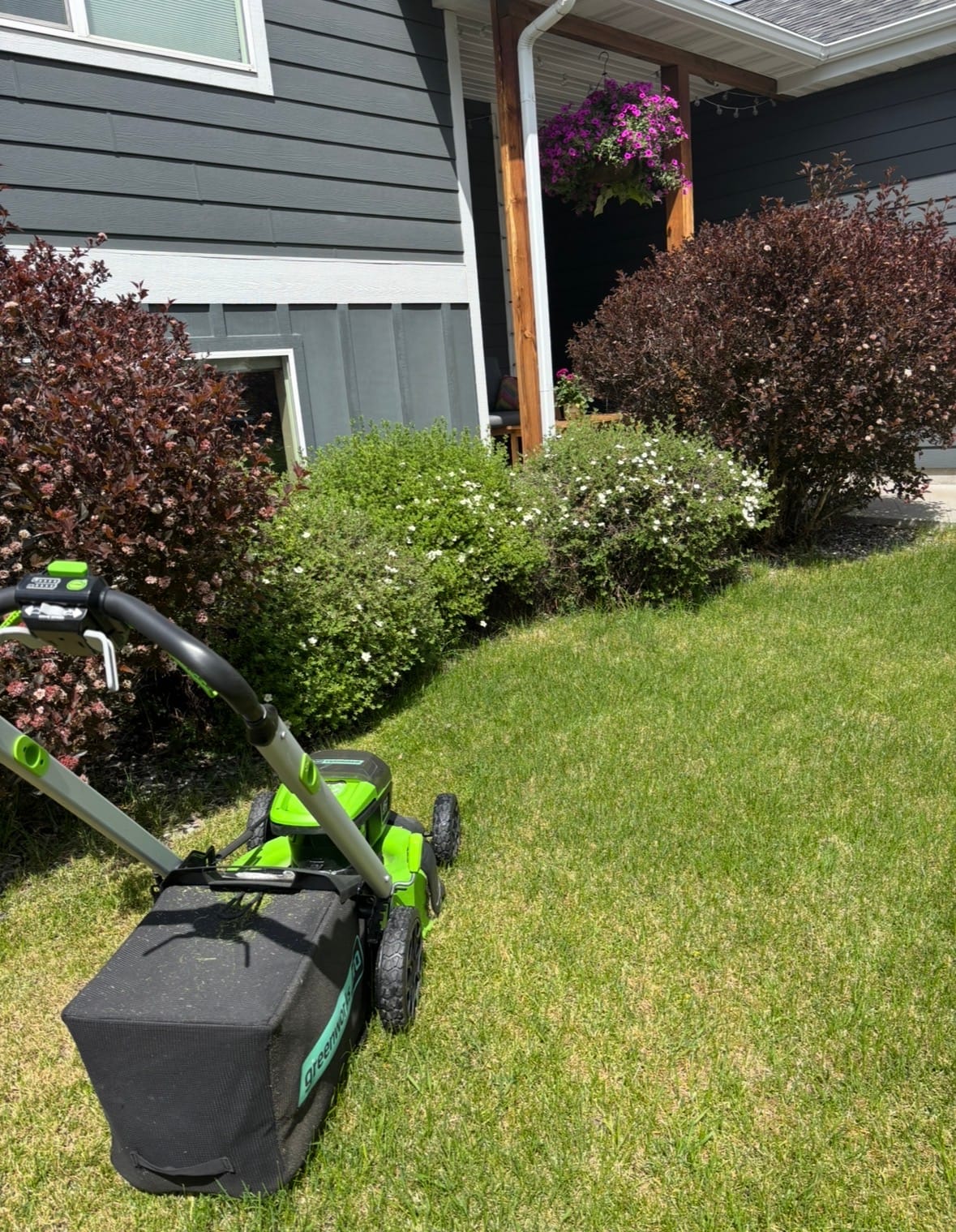
The sound of a lawnmower outside my window this morning reminded me of my Opa in his grey shorts and sandals with socks, white ribbed tank top under an unbuttoned Hawaiian shirt. He would always order the same thing at our local Italian restaurant (Hawaiian pizza - ham and pineapple). He'd never been to Hawaii. He was pulling the ignition string on his old lawnmower, something I could not do, no matter how much he admonished me to pull harder and faster. And then, that delicious cut grass smell, fresh and clean, melding with the dirty, acrid smell of gas, and the sweetly tilting summer evening.
So I mowed the lawn today, after coming home from the gym, already sweaty, my thighs sticking together. But mine is an electric mower, and so the exhaust smell is not like my Opa's, not quite the right cocktail of sweet and toxic that makes me nostalgic. This is not the only thing I'm longing for, knowing full well it was bad for me then, and still would be.
If you want to use this writing prompt from Jeannine Ouellette to do your own Day 4, here it is:
Day 4 Invitation | The Body Remembers
Today I invite you to consider a smell, a sound, or a texture that returns you instantly to a specific time in your life. If possible, think not in terms of a general era, such as elementary school, or the summer you turned 21, but, rather, a specific moment, a particular room, a certain person standing close to you. Let the remembered sensation pull you somewhere. Then make something from what you find in that moment: maybe a small object, a drawing, a meal, a piece of music played or sung or hummed.
Then, write 100 words from inside that sensory memory, as close to the body of it as you can get.
Chapter One: Memory / Day 3 / The Photo's Unknowable Gap
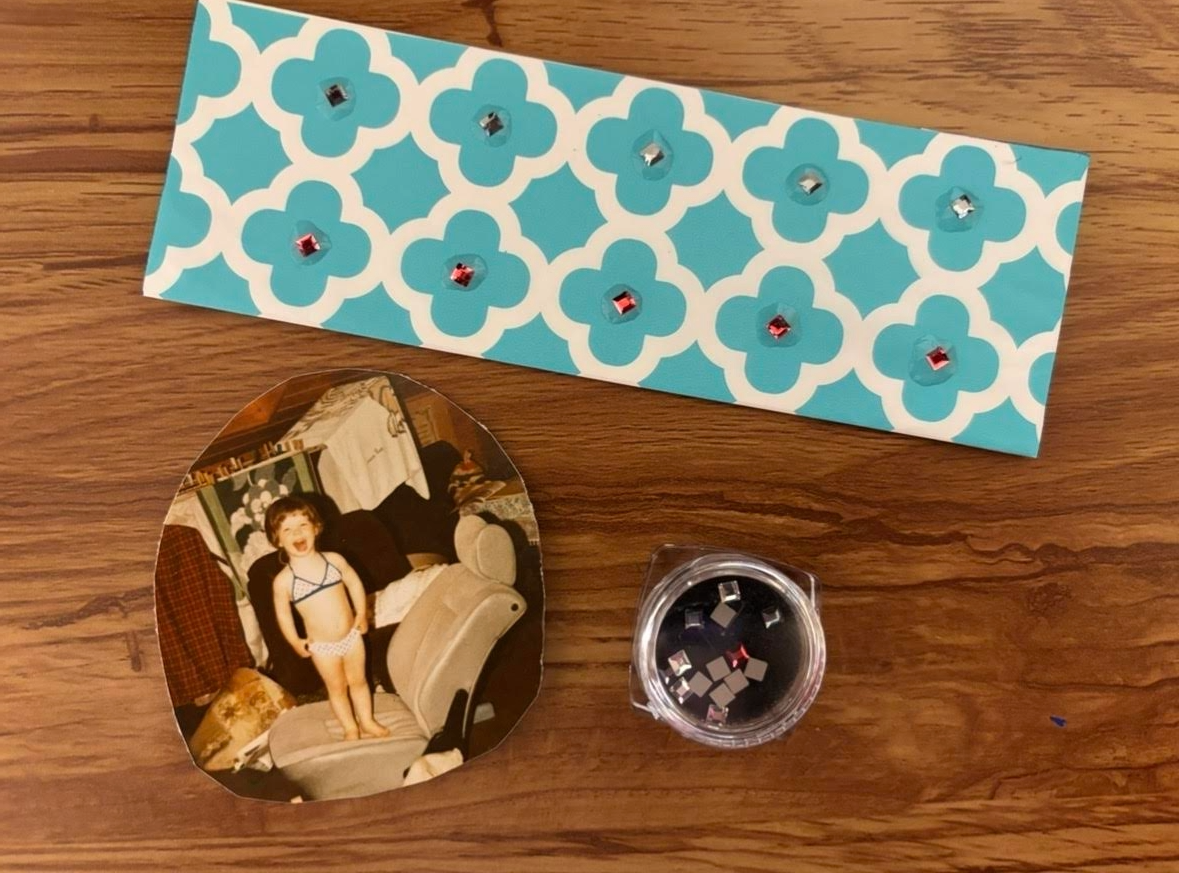
I'm open-mouthed in most childhood photos, practically screaming with laughter. My eyes are squeezed almost shut, my small body buzzing with excitement even in the still images. In this one, I'm maybe two years old, standing on a seat that's been ripped out of an old car, which my parents are using as living room furniture. All around me a mess of clothes and laundry drying on a rack, and beyond the cut edges of the photo, even more mess, and likely my mother smoking, squeezing the Marlboro Red between her lips while taking this picture, and my father, somewhere else, who knows where, or maybe still sitting at the kitchen table with a beer. Someone has cut a circle around me, keeping hidden what might have been lurking, or maybe smiling, in my periphery. I'm sporting one of my mother's kitchen scissor haircuts, bangs that are too short, and the rest a mop of sweaty curls. But I'm wearing my first bikini, blue polka dots on white, the reason for my open-mouthed excitement. I don't know this, but every time I look at this picture, I think it must be the bikini. Must. Or maybe it's just me.
If you want to use this writing prompt from Jeannine Ouellette to do your own Day 3, here it is:
"Day 3 Invitation / The Photo's Unknowable Gap
Find a photograph from your past—one that surprises you, or unsettles you, or no longer quite matches what you remember about that day. Look at it for a while before you make anything. Then make something in response to the gap between the image and your memory of it or what you now know to be closer to the truth of it. In other words, make something in response to the distance between what was recorded and what you actually lived. Write toward what the photo doesn't show: the feeling just outside the frame, the moment before or after, the truth the camera couldn't catch."
Chapter One: Memory / Day 2 / The First Home
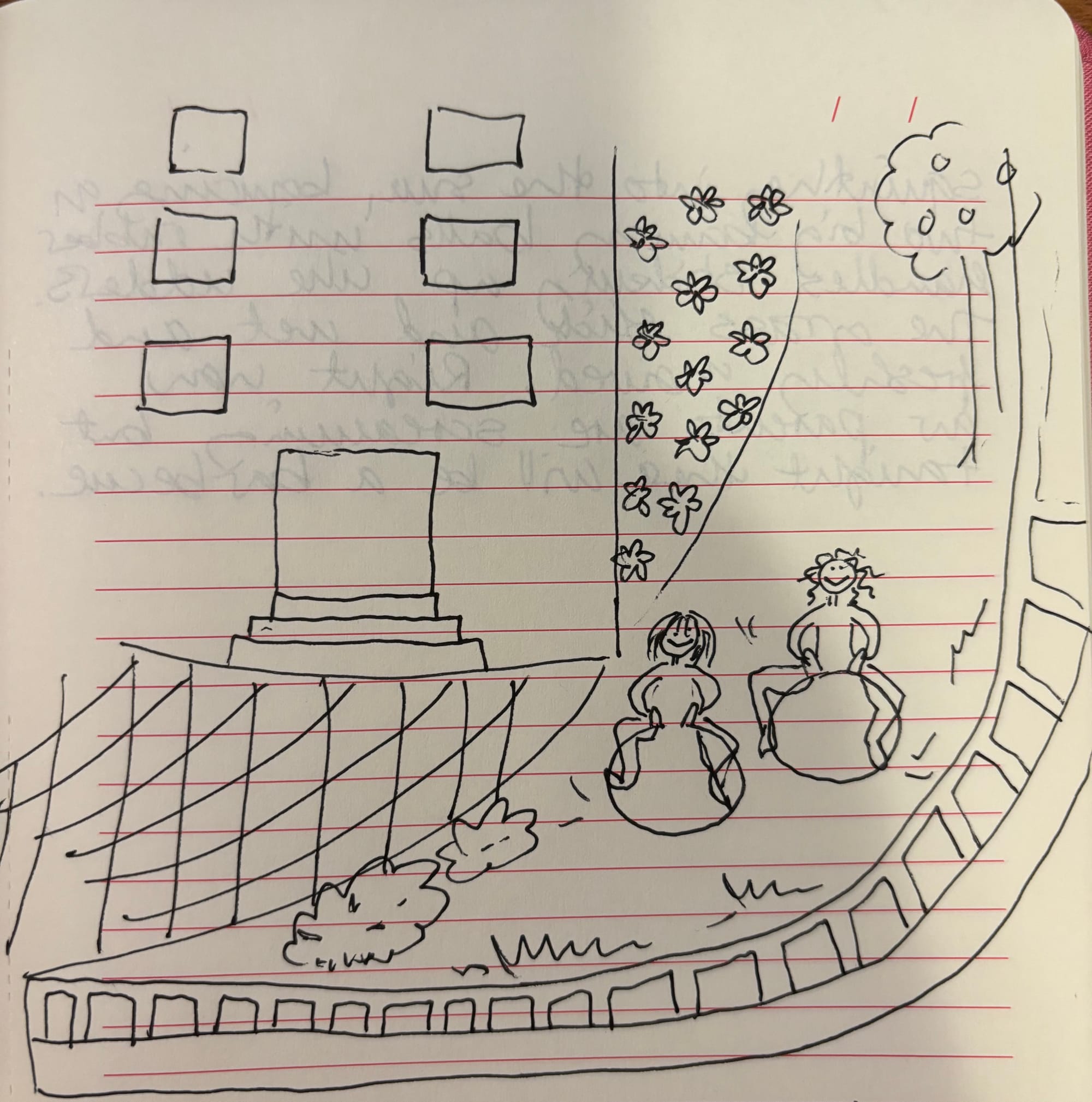
A low-slung iron fence I would jump over instead of going through the clangy gate. A front door with wide steps that everyone I loved could fit on during shimmery summer afternoons, the stone warm and smooth. My sister and I naked and wet from the sprinklers, squinting into the sun, sitting on two giant orange bouncy balls with rubber handles sticking up like upside-down udders. Our bodies, the rubber balls, and the freshly mowed grass all slick and dangerous. Right now, our parents are screaming, but tonight there will be a barbecue.
My house is the biggest one on the street. It stands tall and white and boxy, three apartments for three families, all of them mine, and a wraparound yard with a flower bed cascading down from the first-floor patio. Planters with red geraniums and purple petunias weighing down the second-floor balcony. The skylight of the sweltering third-floor apartment under the roof, open to the thick heat. A vegetable garden in the back with sun-warmed tomatoes and tiny sweet strawberries just for us kids. Apple trees our Opa would pluck clean and then peel and cut the small hard fruit for us after lunch, the rest cooked into sour brown applesauce.
A swing set with fraying ropes and a sandbox that someone had hastily nailed together next to the rusted-out barrel collecting rainwater where we would wash our tomatoes and strawberries. An adult had to move the heavy lid first. That day, we were all still short enough to drown in there.
If you want to use this writing prompt from Jeannine Ouellette to do your own Day 2, here it is:
Day 2 Invitation / The First Home
Make something concrete from the first home you remember. A sketch, a floor plan drawn from memory, a small arrangement of objects that evokes that place — anything that lets you return to it with your hands. It doesn’t have to be a happy memory, or a complete one. Partial is fine. Uncertain is fine. Just a true one. Write 100 words about what you made and what that place still holds for you—what it gave you, what it took, what you find when you go back there now. Also: if you don’t remember your first home at all, just choose a remembered home. There is no wrong way to do this.
Chapter One: Memory / Day 1 / The Hands
For many years, I would do my four daughters' hair almost every morning before school. I would brush and braid and clip into place, and despite all the practice, I never got very good at it.
I made messy French braids and high ponys with little baby curls sticking straight out like a halo and pigtails that were never quite even.
I bought hair bands, stiff, stretchy, narrow, wide, and giant bows and satiny ribbons and colorful scrunchies and those tiny pastel colored rubberbands when my girls asked me to recreate styles they'd seen on TV or on their friends. I would look at pictures and YouTube tutorials and then section off a thousand ponytails that had to be braided and wrapped and knotted together but I could never make it look quite right.
I bought brand-name detangling shampoo that smelled like strawberry and bubblegum and four small oval hot-pink brushes without handles that I saw on an infomercial. Those plastic and rubber brushes were supposed to detangle without tears and protect their hair and add shine and make me feel like a competent mother. They did none of those things.
But I did like my hands that looked like my mother's hands in their soft baby hair, one red, one nearly black, and the twins' light brown like mine.
I would eventually find all the hairbands bent and broken under couch cushions, the vacuum forever sucking up hair ties of all sizes and colors strewn over the floors and matted into the carpet and the dog eating their favorite scrunchies along with their smelliest socks. The hairclips I carefully fastened onto their temples before school failed to keep their wispy bangs out of their eyes by the time they arrived in their classrooms, and were either hanging on by a single hair in the afternoon or had been irretrievably lost, added to the debris of schoolchildren dropping things out of their hands and off their bodies, out of their pockets and backpacks, adding, adding, adding to the layer of Dollar store toys and lunchboxes and gym socks and permission slips and chewed-up pencils with pom-poms at the top that raises the floor of every school and family home and playground.
I just kept buying more. Kept brushing and braiding and watching YouTube tutorials.
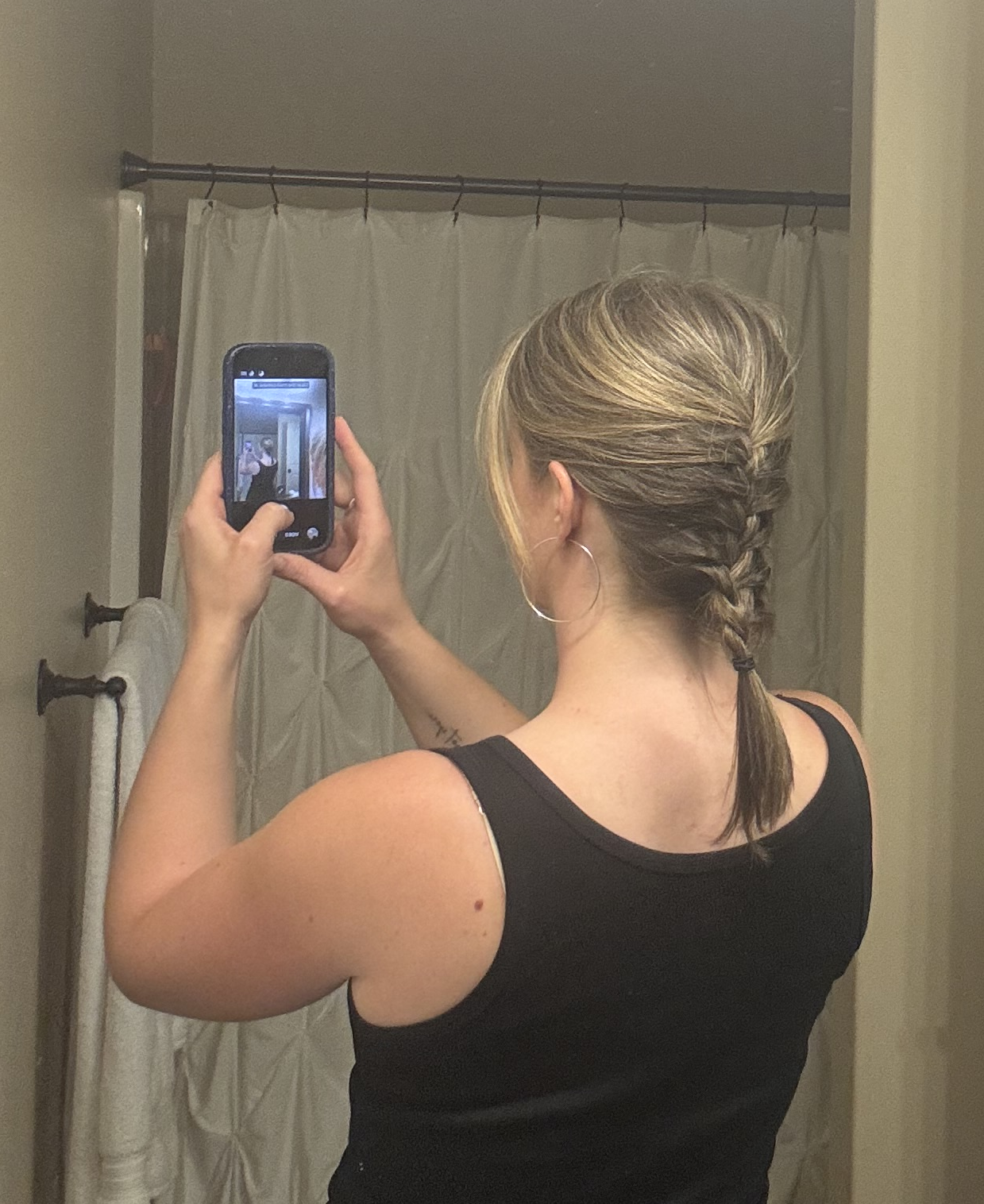
Today, I stood in front of the mirror, blindly braiding my fine hair into a French braid behind my head, just like I used to as a kid. I would get up in the morning, when everything was still dark and nobody else was awake yet, get myself ready for school, attempt to do my hair, and then walk the few blocks to my elementary school. I was always ashamed that I looked like I'd done it myself, always trying and failing to look like my mother got up and fixed my hair before school.
The braid today was messy, just like every other time I attempted one on myself or my daughters, who also always looked like they'd done it themselves. But they were not ashamed.
If you want to use this writing prompt from Jeannine Ouellette to do your own Day 1, here it is:
"Day One Invitation | The Hands
Go into a memory that lives in your hands—something you made, built, cooked, or held. Give yourself 20 minutes to remake it: cook it again, fold it again, arrange it again, or simply hold the object, if you still have it. Write 100 words that follow the making back to wherever it leads. Don’t explain the memory. Instead, put us inside it."
Member discussion